
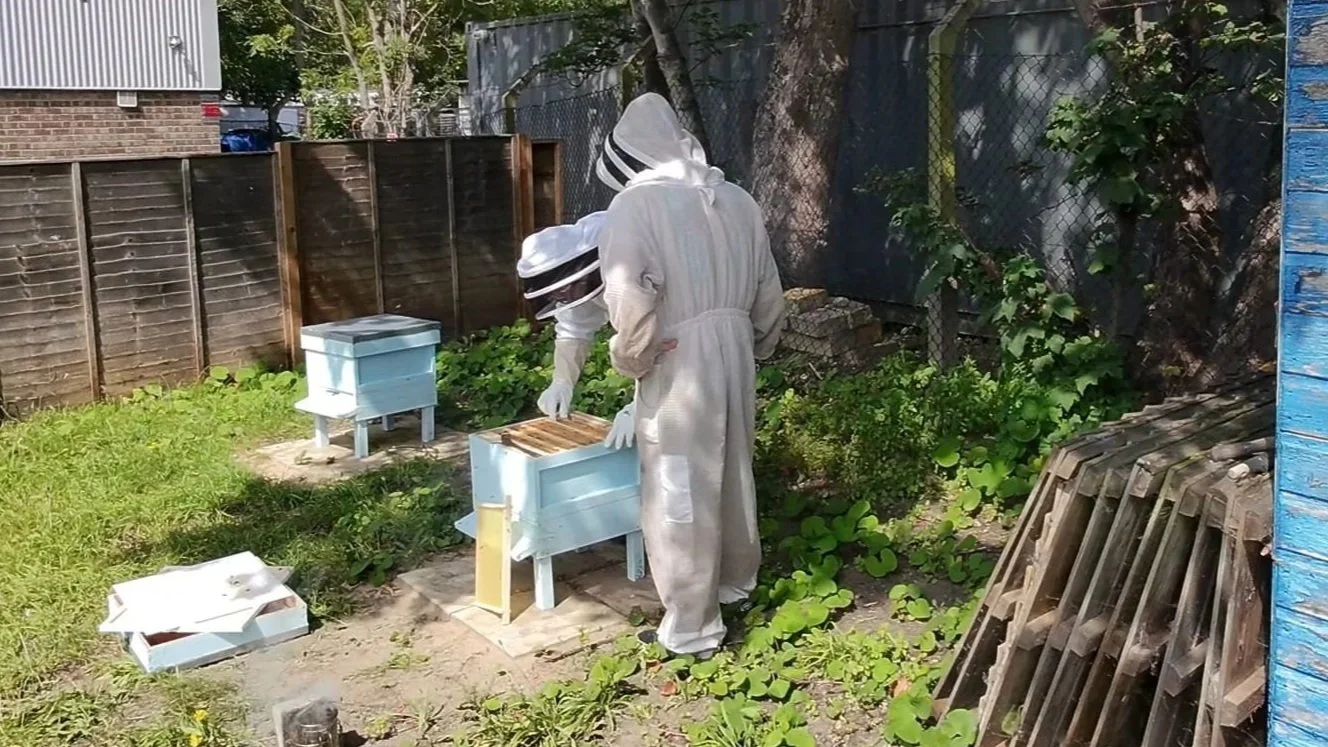
A.C.E CIC Community Apiary
being installed
The idea of a community apiary is simple, but it is often misunderstood.
People hear the term and assume it is just a place where bees are kept. While that is part of it, a community apiary is less about the hives themselves and more about what happens around them.
At its core, it is a shared space where people come together to learn, take part, and look after bees as a group.
A Shared Approach to Beekeeping
Traditional beekeeping is usually done individually. One person or household owns the hives, manages them, and takes responsibility for everything that comes with it.
A community apiary works differently.
Instead of one person doing everything, the responsibility is shared. The hives are managed collectively, with guidance from experienced beekeepers, and people are encouraged to take part at whatever level they feel comfortable.
This removes many of the barriers that stop people from getting involved in the first place.
What Happens at a Community Apiary
Most activity centres around regular sessions during the beekeeping season.
These sessions typically involve:
Inspecting hives to check the health of the colony
Looking for the queen and signs of brood
Managing space within the hive as it grows
Monitoring for pests or disease
Learning how bees behave throughout the season
Rather than being taught in a classroom, everything is learned through direct experience. People are shown what to look for, why it matters, and then given the chance to take part themselves.
Over time, confidence builds naturally.
Learning Without Pressure
One of the key differences in a community apiary is the pace.
There is no expectation for people to become experts quickly. Some attend every week and become deeply involved. Others come occasionally, observing more than participating.
Both are valid.
The aim is not to create professional beekeepers, but to make beekeeping accessible and understandable to anyone who is interested.
Supporting the Bees
While the people are central to the project, the wellbeing of the bees remains a priority.
The hives are managed carefully to ensure:
Colonies remain healthy and productive
Interventions are carried out when needed
Bees have enough space and resources
Seasonal changes are responded to appropriately
This balance between education and responsibility is important. People are not just observing bees, they are actively contributing to their care.
Creating a Space for People
Over time, a community apiary becomes more than just a place to keep bees.
It becomes a place where people:
Meet others with similar interests
Spend time outdoors in a structured way
Develop practical skills
Build confidence through hands-on learning
For some, it offers a routine. For others, it provides a break from daily pressures. The environment is calm, focused, and grounded in something real.
Who It Is For
Community apiaries are open to a wide range of people.
They are suitable for:
Complete beginners with no experience
Those interested in nature and biodiversity
People looking for a practical, outdoor activity
Individuals who benefit from structured group environments
Because everything is provided and supported, there is very little required to take part beyond a willingness to try.
The Wider Impact
The benefits of a community apiary extend beyond the people directly involved.
By maintaining healthy colonies, these spaces contribute to local pollination and biodiversity. They also help raise awareness about the importance of bees and the role they play in the environment.
At the same time, they create opportunities for education, volunteering, and community engagement in a way that is both practical and accessible.
A Different Way of Doing Things
A community apiary is not just about keeping bees. It is about changing how people access and experience beekeeping.
By removing cost, complexity, and isolation, it opens the door for more people to get involved in something that would otherwise remain out of reach.
It turns beekeeping from an individual activity into a shared one, and in doing so, creates something that benefits both people and the environment.
