

Why Church of England Sites Are Brilliant Places for Community Apiaries
Churchyards have always been more than places people pass through. They are quiet green spaces, places of memory, wildlife, care, and community.
For many Church of England churches, that land is also becoming an important part of caring for creation. The Church of England has its own Land and Nature resources to help churches look after wildlife and biodiversity in churchyards and other church land.
That is where community apiaries can fit beautifully.
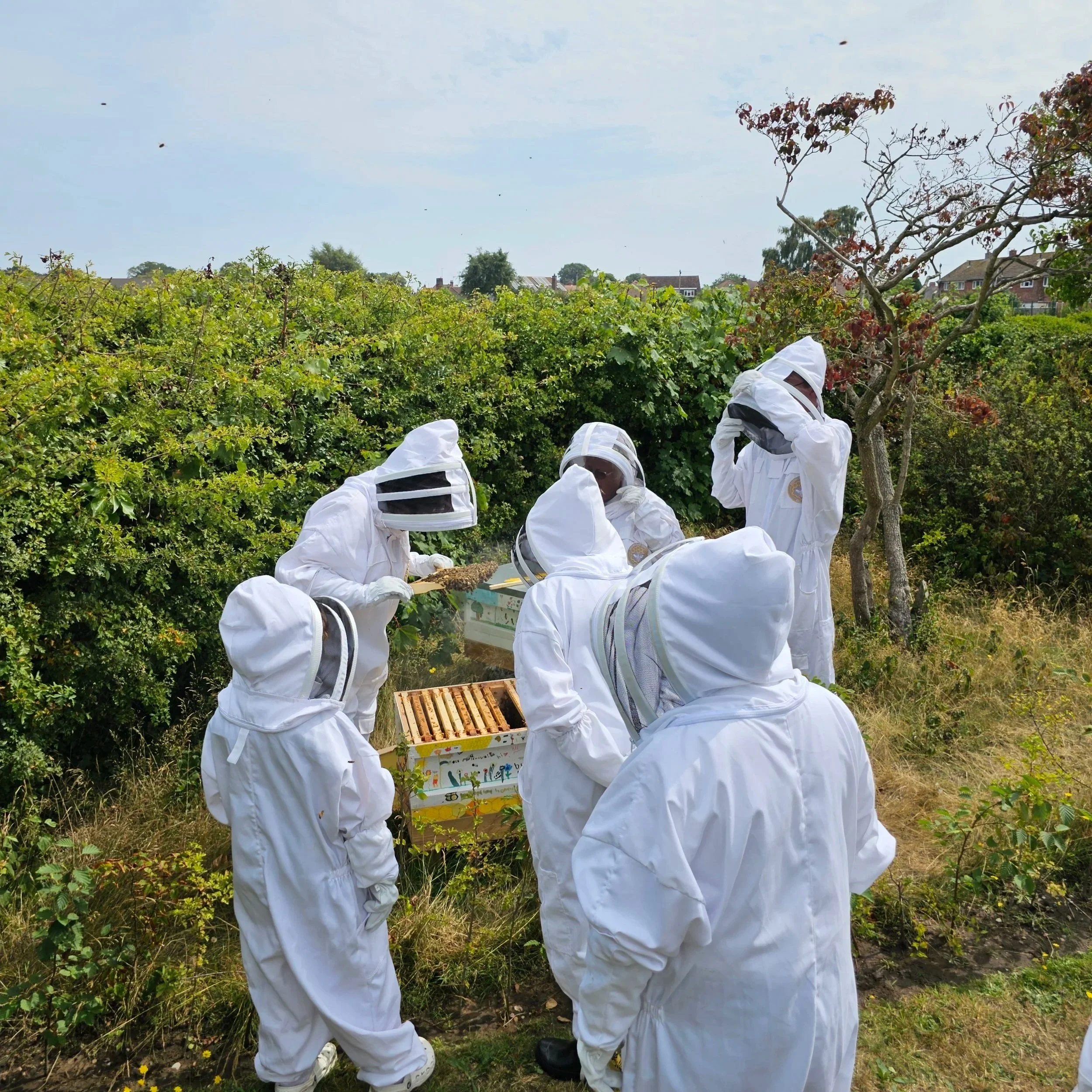
At Project Apis CIC, we work with churches, community groups, schools, and local organisations to create community apiaries that help people learn beekeeping, support pollinators, and connect with nature in a practical way.
Churchyards Are Already Important for Wildlife
Many churchyards have something rare, land that has been relatively undisturbed for many years.
That can make them valuable places for wildflowers, trees, insects, birds, fungi, and small mammals. The Diocese of Norwich describes churchyards as safe havens for a wealth of species, including some that are rare or protected.
This matters because biodiversity does not only belong in nature reserves.
It can live beside footpaths, around gravestones, along hedges, beneath old trees, and in quiet corners of church land.
A community apiary can become part of that wider picture. It gives people a reason to notice what is already there, and to think more carefully about how the space is managed.
Community Apiaries Can Support Eco Church Goals
Many churches are already working towards Eco Church awards through A Rocha UK.
Eco Church encourages churches to take practical action on worship, buildings, land, community, lifestyle, and care for creation. A Rocha describes Eco Church as an award scheme with resources to help churches make environmental changes, with Bronze, Silver, and Gold award levels.
A community apiary can support that kind of work because it is visible, practical, and educational.
It can help a church show that it is taking biodiversity seriously, not just by talking about nature, but by creating a living project that people can visit, learn from, and care for.
A Church Apiary Is Not Just About Honeybees
This is important.
A community apiary is not about filling every churchyard with honeybees and forgetting everything else. Healthy biodiversity needs a wide mix of pollinators, including bumblebees, solitary bees, hoverflies, butterflies, moths, beetles, and other insects.
That is why a church apiary works best when it sits alongside wider pollinator friendly planting and good land care.
This could include:
leaving some grass longer
planting nectar rich flowers
protecting existing wildflowers
creating bare soil patches for ground nesting bees
adding bee hotels in suitable places
reducing pesticide use
planting for different seasons
The hives become one part of a bigger environmental story.
Churches Are Built Around Community
A community apiary works best when people feel welcome.
That is one reason Church of England sites can be such a good fit. Churches are already used to bringing people together, offering hospitality, supporting volunteers, and creating space for people who may otherwise feel isolated.
Not everyone who comes to a community apiary wants to become a beekeeper.
Some people want to learn something new. Some want a reason to get outdoors. Some want routine. Some want to meet others. Some simply want to stand near a hive for the first time and ask questions.
That still matters.
A church community apiary can create gentle, regular opportunities for people to connect with nature, with each other, and with the church site in a new way.
Community Apiaries Can Help Churches Reach New People
Many churches are looking for ways to use their outdoor space more actively.
A community apiary can help open up conversations with people who might not usually attend a service or church event.
People may first come because they are interested in bees. Then they discover the churchyard, meet volunteers, join a session, or bring family members along.
That kind of soft connection is valuable.
It helps the church become known not only as a building, but as a living part of the local community.
Churches Can Become Places of Learning
Community apiaries also create natural learning opportunities.
They can support:
school visits
youth groups
family sessions
Eco Church activities
wildlife recording
pollinator planting days
intergenerational volunteering
local nature events
Projects such as Churches Count on Nature show how churchyards can bring people together to record and notice wildlife. A Rocha UK describes Churches Count on Nature as an annual event where people visit churchyards and record plant and animal species.
A community apiary can add another practical layer to this work.
It gives people a reason to talk about pollination, food, flowers, habitats, seasons, and the small creatures that often get overlooked.
What a Church Needs Before Hosting an Apiary
A church does not need to know everything about beekeeping before exploring the idea.
That is the point of working with a project like ours.
Project Apis CIC can help churches think through the practical side, including:
where the hives could go
how people will access the site safely
what equipment is needed
how volunteers will be supported
how training will work
how the apiary fits with the church’s wider land use
how pollinator planting can support the project
Every site is different.
Some churchyards may be perfect for hives. Some may be better suited to a pollinator garden, bee hotel, bumblebee project, or educational workshop instead. The right answer depends on the space, the people, the access, and the level of local support.
A Simple Way to Care for Creation Locally
For Church of England churches searching for practical biodiversity ideas, a community apiary can be a strong option.
It is local. It is visible. It is educational. It brings people together.
Most importantly, it helps turn care for creation into something people can see, touch, learn from, and take part in.
Church land has huge potential. With the right support, a quiet corner of a churchyard can become a place where people learn beekeeping, support pollinators, build confidence, and care for nature together.
If your church, parish, PCC, Eco Church group, or Diocese would like to explore hosting a community apiary or Pollinator Project, Project Apis CIC would be happy to talk it through.
